Evaluating the Washington DC Landmark 3D Shadow Box for Modern Paper Crafting Projects
For crafters seeking to elevate their home decor or create meaningful, personalized gifts, the transition from flat paper art to dimensional installations represents a significant shift in technique and visual impact. The Washington DC Landmark 3D Shadow Box stands out as a specific template design within this growing category of layered paper art. Unlike traditional two-dimensional silhouettes, this project utilizes an eight-layer construction to replicate the depth and architectural grandeur of the United States capital's skyline. Understanding whether this specific template fits your current skill level, available tools, and aesthetic goals requires a close examination of its structural requirements, material compatibility, and potential applications compared to other crafting approaches.
Structural Complexity and Design Distinction
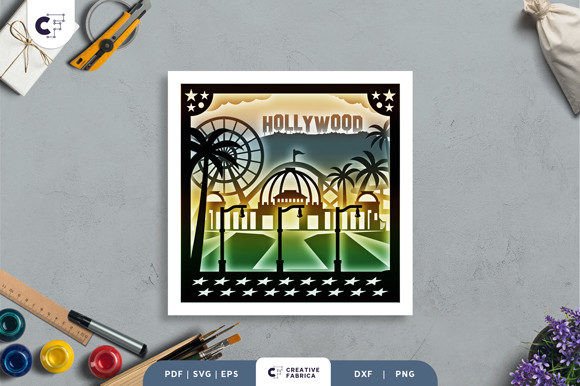
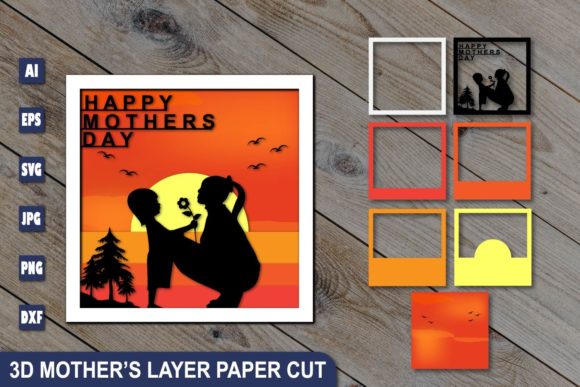
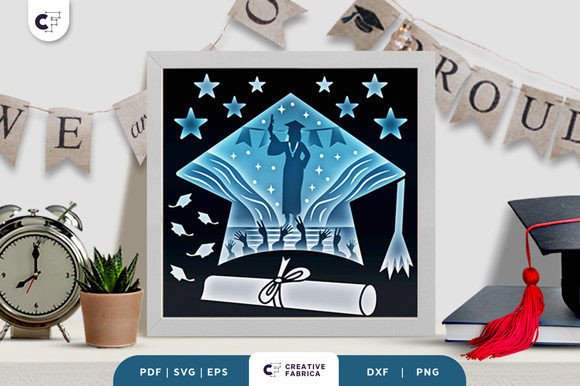
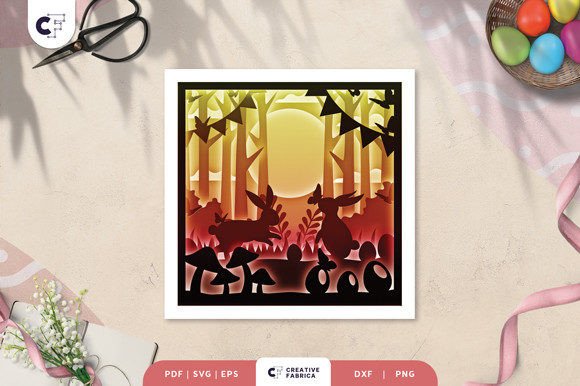
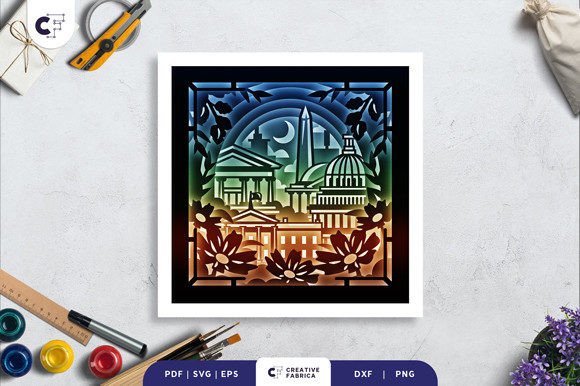
The defining characteristic of the Washington DC Landmark 3D Shadow Box is its reliance on stratification to create perspective. The template consists of eight distinct layers, each cut to reveal specific portions of the layer beneath it. This method mimics the parallax effect seen in professional shadow box displays found in galleries or high-end retail spaces. When assembled, the spacing between these layers creates genuine shadows, adding a dynamic quality that changes depending on the angle of light hitting the piece.
In comparison to single-layer die-cuts or simple card overlays, this multi-layer approach demands higher precision. The design features iconic elements of the DC skyline, requiring clean cuts to maintain the recognizability of the landmarks. While simpler projects might forgive minor tearing or uneven edges, the cumulative effect of eight layers means that imperfections can compound, potentially obscuring the details of the deeper layers. Therefore, this template is best suited for crafters who have moved beyond introductory projects and are comfortable managing complex assemblies where alignment is critical.
File Formats and Machine Compatibility
One of the primary decision factors for digital crafters is file compatibility. This template is provided in a comprehensive suite of formats: SVG, PDF, EPS, PNG, and DXF. This variety ensures broad accessibility regardless of the hardware you own. The inclusion of the SVG file is particularly notable for users of electronic cutting machines like the Silhouette or Cricut. These vector files allow for seamless communication between design software and the cutter, ensuring that the intricate details of the landmarks are rendered accurately.
However, the availability of PDF and PNG formats acknowledges that not every crafter possesses a digital cutter. For those relying on manual tools, such as art knives and scissors, the PDF serves as a reliable print-and-cut guide. It is important to note that while manual cutting offers a tactile, traditional experience, executing eight layers of intricate cityscape details by hand requires considerable patience and a steady hand. The trade-off here is time versus automation; a machine can complete the cutting phase in minutes, whereas manual execution could take several hours, depending on dexterity.
Material Selection and Structural Integrity
The success of any 3D shadow box hinges heavily on the choice of paper stock. Because the layers must stand apart to create depth, the material needs sufficient rigidity to resist warping while remaining thin enough to stack neatly within a frame. The recommended specification for this project is Encore Cardstock 80 lb cover (216 gsm). This weight class strikes a balance between flexibility and stiffness.
When evaluating alternatives, using standard printer paper (typically 20 lb) would result in a sagging structure that fails to hold the 3D form, especially if the piece is intended to be hung vertically. Conversely, using heavy chipboard might make the layers too thick to fit into standard deep-set frames without custom modification. The 80 lb cover stock is generally considered the industry standard for this type of work because it holds its shape well when glued at the edges but is still easy to cut with most consumer-grade machines. If you choose to substitute materials, ensure the gram weight remains close to the 216 gsm benchmark to maintain the intended structural integrity.
Assembly Considerations and Adhesives
Assembling an eight-layer design introduces challenges regarding adhesive selection and spacing consistency. To achieve the desired 3D effect, spacers or foam tape must be applied between each layer. While the template provides the visual design, the creator must determine the spacing distance. Too little space reduces the shadow effect; too much can make the piece look disjointed or cause it to exceed the depth capacity of standard frames.
Double-sided tape or specialized craft glue is essential for this process. Liquid glues can sometimes warp lighter cardstocks or seep out from the edges, marring the clean lines of the skyline. Foam adhesive squares are often preferred by experienced crafters for shadow boxes because they provide consistent height and strong bonding power. This step transforms the flat cuts into a cohesive sculpture, but it also represents a point of no return; once the layers are bonded, adjustments are difficult to make without damaging the paper.
Lighting Options: Framed Art vs. Light Box
A unique versatility of the Washington DC Landmark 3D Shadow Box is its dual potential as either a standard framed wall decoration or an illuminated light box. This decision significantly alters the final aesthetic and the resources required.
Standard Framed Display: In this configuration, the piece relies on ambient room lighting to cast natural shadows across the layers. This approach is subtler and integrates well into traditional gallery walls or office spaces. It requires only a deep-frame shadow box (typically 1.5 to 2 inches deep) and does not require electrical components. This is often the preferred route for those who want a low-maintenance decor item.
Illuminated Light Box: By integrating LED strips between the layers, the silhouette transforms into a glowing centerpiece. This method highlights the negative space and creates a dramatic contrast, particularly effective for city skylines where the "windows" or gaps in the buildings catch the light. However, this approach adds complexity. It requires sourcing battery-operated or plug-in LED strips, managing wire concealment within the frame, and ensuring the paper opacity is suitable for backlighting. Some cardstocks may appear too dark when backlit, so testing a sample piece with your chosen light source is advisable before committing to the full assembly.
Sizing, Scalability, and Customization
The template comes with a base size of 20.32 × 20.32 cm (approximately 8 × 8 inches). This square format is versatile, fitting easily into standard small frames or serving as a modular unit in a larger grid display. A critical technical consideration when working with SVG files is scalability. While the design can be resized to fit different frames, it is imperative to maintain the original aspect ratio.
Distorting the image by stretching it horizontally or vertically will misalign the layers, causing the landmarks to lose their proportional accuracy. For example, the Capitol Dome or the Washington Monument could appear unnaturally wide or narrow, breaking the realism of the skyline. If a larger display is desired, it is better to scale the entire project up uniformly or consider tiling multiple units together rather than distorting the individual file.
Decision Factors: Is This Template Right for You?
Determining whether to proceed with the Washington DC Landmark 3D Shadow Box depends on your specific objectives and constraints. This project is an excellent choice if you are looking for a sophisticated gift for a history enthusiast, a political science student, or someone with a connection to the nation's capital. Its layered nature conveys effort and thoughtfulness, distinguishing it from mass-produced prints.
However, there are scenarios where this might not be the optimal path. If you are a complete beginner to paper crafting, the eight-layer alignment might prove frustrating without prior experience in layering techniques. Additionally, if you do not have access to a deep-set frame or the willingness to source one, the 3D effect cannot be properly showcased. Finally, color expectations should be managed; as with all digital templates, the final appearance depends entirely on the cardstock you select. The preview images serve only as a layout guide, and the actual mood of the piece will shift dramatically based on whether you choose monochromatic tones, patriotic colors, or metallic finishes.
Ultimately, this template offers a robust framework for creating high-impact dimensional art. By understanding the material needs, assembly nuances, and lighting possibilities, you can effectively evaluate if this project aligns with your crafting repertoire and decorative vision.