Blender Basics: Launch Your 3D Journey
Stepping into the world of three-dimensional design often feels like standing at the base of a massive mountain. The terrain looks steep, the tools seem complex, and the path forward isn't always clear. However, Getting Started with Blender Open Source 3D Modelling Software changes that narrative entirely. It transforms an intimidating industry standard into an accessible playground for creators of all backgrounds. Whether you are a marketer looking to create eye-catching product visuals, an educator wanting to build interactive lessons, or a hobbyist eager to bring imaginary worlds to life, this software offers a gateway without the barrier of expensive licensing fees.
In this comprehensive exploration, we follow the guidance of 3D designer Jose Vega, who breaks down the initial learning curve into manageable, logical steps. The true power of this approach lies not just in learning which button does what, but in understanding the philosophy behind the workspace. Blender is not merely a tool; it is an ecosystem. By mastering the fundamentals early, you set a foundation that supports everything from simple motion graphics to complex character animation.
Demystifying the Interface and Workflow
The first hurdle for any new user is the interface. Unlike word processors or basic image editors, 3D software requires you to think in X, Y, and Z axes simultaneously. When you begin Getting Started with Blender Open Source 3D Modelling Software, the screen can appear cluttered with viewports, timelines, and property panels. This is where structured guidance becomes invaluable.
Jose Vega's method focuses on contextualizing these elements rather than memorizing them. You learn that the "Workspace" is not static; it is a customizable environment tailored to your current task. Need to sculpt a character? The layout shifts to prioritize brushes and dynotopo settings. Ready to animate? The timeline and graph editor take center stage. This adaptability is a core strength of Blender, allowing professionals to streamline their workflow and reduce visual noise.
Navigation is another critical skill. Moving through a 3D space requires a different muscle memory than scrolling through a webpage. Learning to orbit, pan, and zoom efficiently allows you to inspect your models from every angle without losing your place. Once you internalize these movements, the software begins to feel like an extension of your own hands rather than a rigid program you are fighting against.
From Cubes to Complex Forms
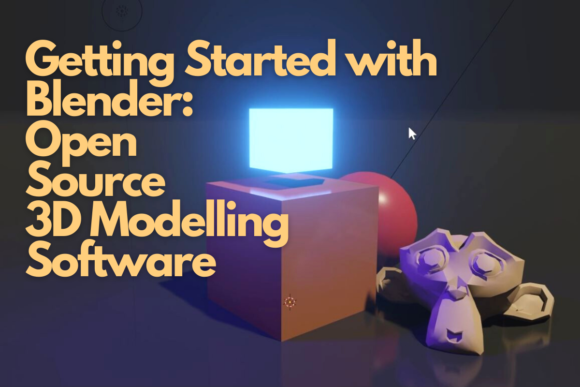
Every master was once a beginner, and in 3D modeling, everyone starts with a cube. It sounds trivial, but the process of manipulating this primitive shape teaches the fundamental operations of the software: extruding, scaling, rotating, and looping cuts. These basic actions are the building blocks of every high-end asset you see in movies or video games.
During the initial classes, you will move beyond simple geometry to understand how vertices, edges, and faces interact. This is the grammar of 3D language. For instance, a freelancer creating a logo for a client might start with a text object, convert it to a mesh, and then extrude it to give it depth. Understanding how to clean up topology—the flow of polygons across a surface—ensures that the model looks smooth when rendered and deforms correctly if animated later.
The ability to create these first basic three-dimensional objects provides an immediate sense of accomplishment. It bridges the gap between abstract theory and tangible result. You aren't just reading about 3D; you are making it. This hands-on experience is crucial for retaining knowledge and building the confidence needed to tackle more ambitious projects.
Real-World Applications Across Industries
The versatility of Blender extends far beyond the realm of indie game developers and hobbyists. In the modern digital economy, Getting Started with Blender Open Source 3D Modelling Software opens doors across various professional sectors.
- Marketing and Advertising: Brands constantly need fresh visuals. With Blender, marketers can create photorealistic product renders without organizing expensive photo shoots. You can control lighting, materials, and camera angles perfectly to highlight specific features of a product.
- Educational Content: Educators can use 3D models to explain complex scientific concepts, historical artifacts, or architectural structures. Visualizing a molecule or a ancient ruin in 3D engages students far more effectively than static textbook images.
- Architectural Visualization: Architects and real estate agents use these tools to walk clients through unbuilt spaces. The ability to render realistic lighting and textures helps stakeholders visualize the final outcome before a single brick is laid.
- Social Media and Content Creation: Bloggers and influencers are increasingly using motion graphics to stand out in crowded feeds. Simple animated loops or 3D typography created in Blender can significantly boost engagement rates.
For entrepreneurs and business owners, the cost-effectiveness of open-source software cannot be overstated. Eliminating subscription fees means resources can be redirected toward training, hardware, or other operational needs. Furthermore, owning your workflow without reliance on proprietary cloud licenses ensures long-term stability for your creative assets.
Building a Sustainable Creative Skill Set
One of the most significant benefits of diving into this software is the development of spatial reasoning and problem-solving skills. 3D modeling forces you to think about structure, light, and physics in ways that 2D design does not. It challenges you to consider how an object exists in space, how light bounces off its surface, and how it interacts with its environment.
Moreover, the community surrounding Blender is one of its greatest assets. Because it is open source, there is a massive global network of users sharing tutorials, plugins, and troubleshooting tips. When you encounter a roadblock, chances are someone else has already solved it and shared the solution freely. This collaborative spirit accelerates learning and fosters a sense of belonging within the creative industry.
However, approaching this tool requires patience. The learning curve is real. You will encounter moments where a render looks noisy, a mesh behaves strangely, or a shortcut key doesn't work as expected. These are not failures; they are part of the process. The key is to focus on incremental progress. Mastering the navigation today allows you to model a chair tomorrow, which leads to designing a full room next month.
Making the Leap
If you have been hesitating to enter the world of 3D, now is the ideal time. The technology has matured, the hardware requirements are more reasonable, and the educational resources are better than ever. Getting Started with Blender Open Source 3D Modelling Software is not just about learning a program; it is about acquiring a superpower that enhances your professional value and creative expression.
Whether your goal is to launch a new career path, enhance your current portfolio, or simply enjoy the satisfaction of creation, the journey begins with a single step. By following a structured approach like the one offered by Jose Vega, you bypass the confusion of unstructured trial-and-error. You gain a clear roadmap from installation to your first render.
Embrace the complexity, enjoy the experimentation, and remember that every expert was once a beginner staring at a default cube. The tools are in your hands, free and ready to use. All that remains is your curiosity and the willingness to start creating.