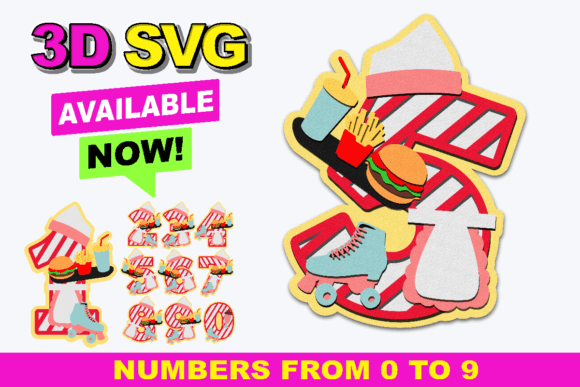
1950 Retro Diner Numbers 3D SVG Collection
There is a specific kind of nostalgia that hits when you see the bold, rounded typography of a 1950s American diner. It evokes images of chrome stools, checkered floors, and milkshakes served in tall glasses. For crafters and designers, capturing this aesthetic requires more than just a flat image; it demands depth and character. This is where the 1950 Retro Diner Numbers 3D SVG collection becomes an invaluable resource. Unlike standard two-dimensional cut files, this set includes numbers 0 through 9 designed with three distinct layers. These layers are pre-arranged to create a shadowed, dimensional effect that mimics the signage of the mid-century era, ready to be downloaded in a convenient zipped folder for immediate use in your creative projects.
Understanding the 3D Layered Advantage
The core appeal of this collection lies in its structure. Each number is not a single path but a composition of three separate files. When assembled, these layers create a visual hierarchy that adds weight and presence to any design. For those using Silhouette Studio or Cricut Design Space, the workflow is streamlined because the heavy lifting of offsetting and layering has already been done. You simply import the files, assign your materials, and cut.
However, the utility extends beyond these two major platforms. If you operate a different type of cutting machine, the critical factor is compatibility with SVG formats that support multiple layers. The value here is time conservation. Manually creating a three-layer shadow effect for ten different numbers can take hours of precise alignment and offset adjustments. Having this pre-configured allows you to bypass the technical setup and focus entirely on the artistic application.
Perspectives for Beginners and Hobbyists
For someone just starting their journey with digital cutting machines, the learning curve can feel steep. Concepts like layer management, material settings, and weeding intricate designs can be overwhelming. The 1950 Retro Diner Numbers 3D SVG serves as an excellent educational tool in this context. Because the files are pre-separated, beginners can practice the mechanics of layering without the risk of ruining a design due to miscalculated offsets.
A hobbyist might use these numbers for a personal birthday celebration, perhaps creating a custom cake topper for a grandparent who loves the old-school diner vibe. The priority here is ease of use and presentation. A flat number on a cake can look generic, but a 3D number made from fondant-safe acrylic or layered cardstock instantly elevates the presentation. The immediate success of assembling a professional-looking project boosts confidence, encouraging the user to tackle more complex designs in the future.
Professional Creators and Small Business Owners
For entrepreneurs and small business owners, time is directly correlated with revenue. A professional sticker seller or a custom apparel creator evaluates tools based on speed, reliability, and commercial value. In a production environment, consistency is key. Using a pre-made 3D SVG collection ensures that every "5" or "9" cut for a client looks identical, maintaining brand quality.
Consider a shop owner specializing in retro-themed merchandise. They could apply these numbers to vintage-style t-shirts, using heat transfer vinyl (HTV) in contrasting colors to achieve the shadow effect. Alternatively, they might produce die-cut stickers for laptops or water bottles. The flexibility of the SVG format allows for resizing without loss of quality, meaning the same file can be used for a small logo on a napkin or a large decal for a food truck. The ability to quickly customize orders—such as adding a specific year or table number—allows businesses to respond rapidly to customer requests, enhancing service levels and potential profit margins.
Educational and Community Applications
Educators and community leaders often look for resources that bridge historical themes with hands-on learning. These numbers offer a tangible connection to mid-20th-century design history. A teacher organizing a school project on the 1950s could have students create a mock diner scene. By cutting these numbers from colored foam board or cardboard, students learn about spatial relationships and design principles while engaging with historical aesthetics.
In this scenario, the priority shifts to learning value and flexibility. The fact that the files come in a zipped folder makes distribution easy; a teacher can email the package to students or load it onto classroom computers instantly. The simplicity of the three-layer system allows students of varying skill levels to participate, ensuring that the activity remains inclusive and enjoyable rather than frustratingly technical.
Practical Use Cases Across Materials
The versatility of the 1950 Retro Diner Numbers 3D SVG is best understood through the variety of materials it can accommodate. While vinyl and paper are the most common choices, the layered design opens doors to other mediums:
- Acrylic and Wood: Ideal for permanent signage, house numbers, or decorative wall art. The layers can be cut from different shades of wood stain or painted acrylic to create a subtle, sophisticated depth.
- Fabric and Felt: Perfect for soft goods like baby bibs, tote bags, or quilt blocks. The shadow layer can be sewn or glued beneath the top layer for a plush, textured look.
- Edible Media: As mentioned, cake toppers are a prime application. When cut from food-safe materials, these numbers become the centerpiece of themed dessert tables.
- Stickers and Labels: Great for product packaging or organizational labels where a pop of retro style helps the item stand out on a shelf.
Evaluating Fit for Your Projects
Before downloading, it is helpful to assess whether this specific style aligns with your current goals. If your project requires a sleek, modern, minimalist font, this retro style may not be the right match. However, if you are aiming for warmth, nostalgia, or a bold statement piece, these numbers are highly effective.
Users should also consider their machine's capabilities. While the files are optimized for popular software, ensuring your specific hardware can handle multi-layer imports is a necessary step. For those with older machines or limited software features, the process might require grouping layers manually after import, which adds a minor step but does not diminish the quality of the final output.
Ultimately, the decision comes down to the desired outcome. Do you need a quick solution for a weekend party? Are you building a product line that relies on consistent, high-quality graphics? Or are you exploring design history through craft? The 1950 Retro Diner Numbers 3D SVG addresses all these needs by providing a robust, ready-to-use foundation. It removes the technical barriers of creating 3D effects, allowing creators of all backgrounds to focus on what matters most: bringing their unique vision to life with style and precision.